Why Is My Fridge Not Cooling?
Direct answer: Your fridge is warm but the freezer is cold, or both are warm. Here is how we test airflow, fans, frost and the compressor, in order, before naming a cause.
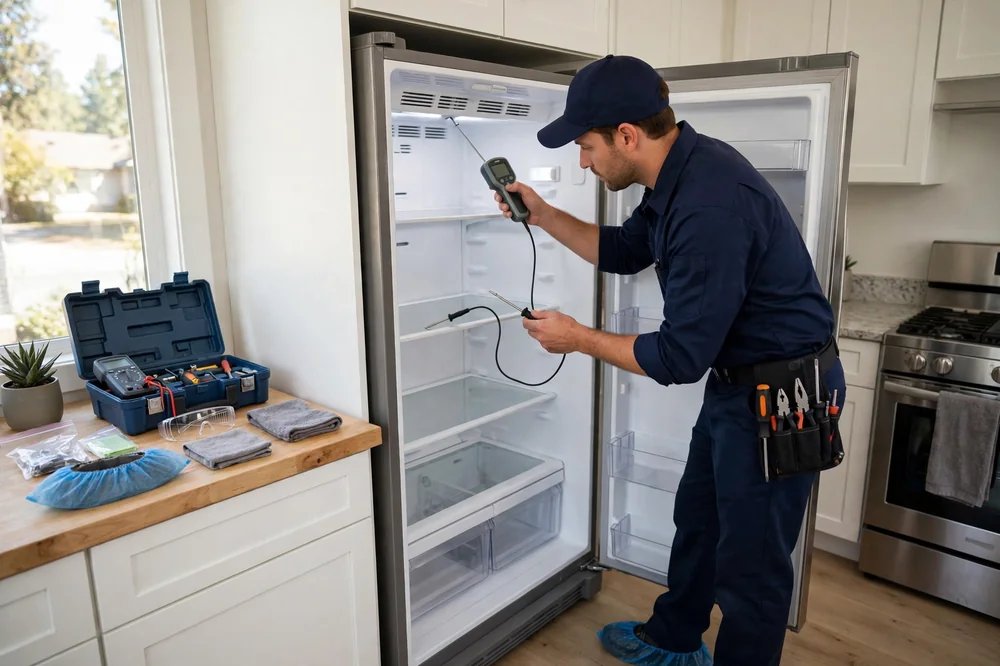
What to Check First
Start with power, temperature settings, door closure, and airflow. A blocked vent, a door that does not close fully, or a wrong setting can look like a major fault, and each one is quick to rule out.
A fridge that feels warm at the top and cold at the bottom is often an airflow story, not a compressor story. Cold air sinks, warm air rises, and a blocked vent or a dead evaporator fan breaks that loop. We check the fan first, then frost, then temperature controls, because that order finds the fault without replacing parts that still work.
What We Test Next
We test the system that matches the symptom: airflow and fans for uneven cooling, defrost parts for frost, water supply and valves for ice and dispenser faults, and compressor start parts for a warm fridge. Testing in order keeps the repair honest and avoids replacing parts by guesswork.
When Repair Makes Sense
Repair makes sense when the fridge is younger, still efficient, and the fault is a single part. Replacement makes sense when age, repeated faults, or a repair cost that is a large share of a new fridge price all point the same way. Our cost guide walks through that decision.
Related Reading
Frequently Asked Questions
What should I check first for this why is my fridge not cooling issue?
Check power, temperature settings, door closure, and blocked vents first. Those checks are safe, and they rule out simple causes before testing parts.
When should I call a tech instead of trying a fix?
Call when cooling is lost, food is at risk, water is leaking, or the fault points to sealed-system, refrigerant, live electrical, or control-board work.
Do you service my fridge brand for this?
Yes. We service Samsung, LG, Whirlpool, GE, Frigidaire, Maytag, KitchenAid, Bosch, Kenmore and more in Gallatin, TN.